
CARI–KAFACI Pest-Monitoring Project Launches Baseline Pest-Surveillance Survey To Strengthen Agricultural Resilience and Food Security in Liberia
SUAKOKO, Liberia – The Korea-Africa Food & Agriculture Cooperation Initiative (KAFACI), in close collaboration with the Central Agricultural Research Institute (CARI), has launched a 10-day baseline post-surveillance survey in the counties of Lofa, Nimba, Grand Cape Mount, Margibi, and Bong. This landmark exercise is designed to strengthen agricultural resilience, safeguard crop production, and enhance national food security.
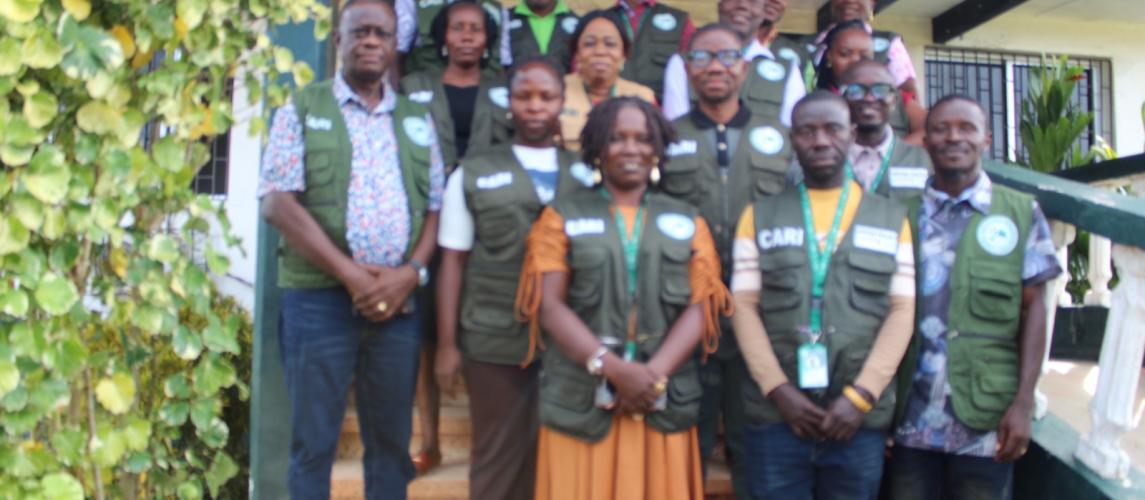
The 10-day exercise from April 27 to May 7, 2026, brought together field supervisors, research assistants, research officers, and senior researchers from the Central Agricultural Research Institute in Suakoko, Bong County.
KAFACI, established in 2011, is a collaborative platform that advances agricultural research, food security, and sustainable development across Africa through partnerships with Korea. Liberia officially joined KAFACI in August 2024, marking a major step in advancing its agricultural development agenda and aligning with the country’s National Agriculture Development Plan (NADP 2024–2030).
In his special remarks, Dr. James S. Dolo emphasized that the survey is more than routine interviews and data collection. It represents a national commitment to generating reliable agricultural information that can guide evidence-based decision-making. He urged technicians and supervisors to approach the exercise with seriousness and dedication, noting that past national surveys had shortcomings. “What you are going to do affects crops, production, pests, and diseases,” he stated, encouraging research assistants and officers to commit to the task during the two-day drill session fully.
Dr. Arthur Bob Karnuah urged participants to approach the pest monitoring survey with seriousness and commitment, stressing, “Let’s do it, so we don’t have more problems.” He reminded the team that research thrives not on government support but on persistence in developing and submitting proposals, likening the process to fishing: “You may cast your net five times without success, but on the sixth, you might catch a fish.”
He emphasized that this persistence has already yielded novel publications and competitive research rankings, and that continued effort is the only way to secure grants and sustain agricultural innovation. Dr. Karnuah praised the crop unit’s dedication and encouraged all research assistants and research officers to collect data carefully, accompanied by photos, to ensure accuracy and reliability.
His message was clear: research is built on resilience, planning, and relentless pursuit of opportunities. By staying committed, Liberia’s agricultural scientists can overcome resource constraints and deliver meaningful results for farmers and communities.
