RESADE-CARI Project Empowers Farmers and Students with Drip Irrigation Technology at Best Practice Hub in Grand Bassa County
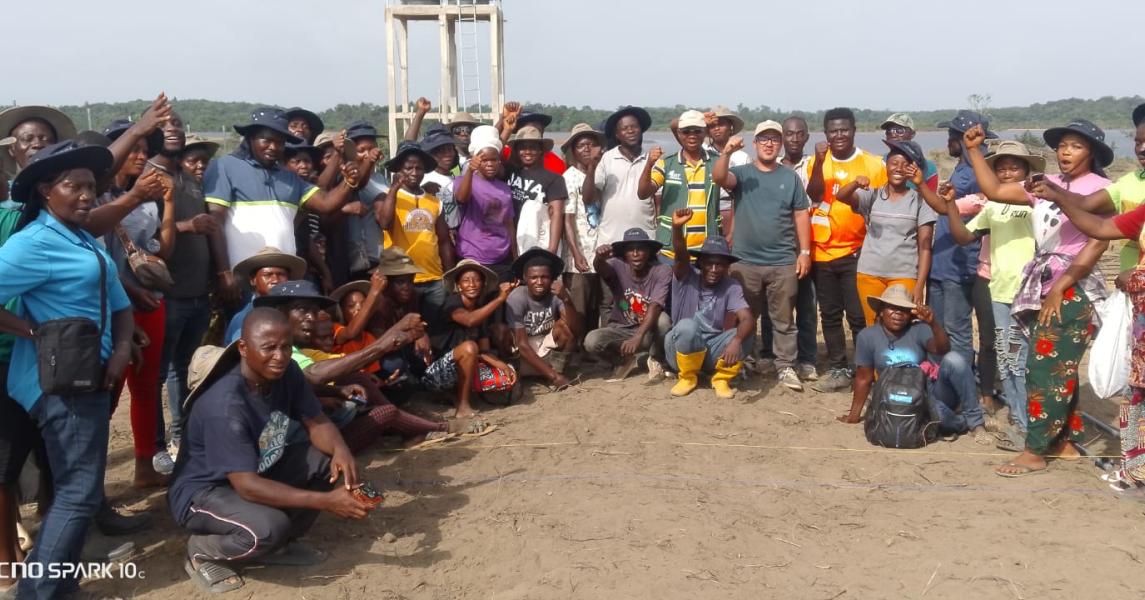
BUCHANAN, Grand Bassa County – In a groundbreaking initiative to advance climate-smart agriculture, the technical team of the RESADE/CARI Project has led farmers, students, and extension agents through an intensive, hands-on training session on installing drip irrigation systems at the Best Practice Hub (BPH) in Grand Bassa County. The training, held from February 16–18, 2026, marked a significant step toward modernizing irrigation practices in Liberia and strengthening resilience against salinity and climate change.
Improving Agricultural Resilience to Salinity through Development and Promotion of Pro-Poor Technologies (RESADE), implemented by the International Center for Biosaline Agriculture (ICBA) in partnership with IFAD and BADEA, tackles the growing challenge of salinization across seven Sub-Saharan African countries: The Gambia, Liberia, Sierra Leone, Togo, Botswana, Mozambique, and Namibia. By rehabilitating degraded lands, introducing salt-tolerant crops, and promoting climate-smart technologies, the project aims to improve food security and reduce poverty among smallholder farmers, particularly women, living in marginal environments.
In Liberia alone, more than 11,550 smallholder farmers, half of them women, are adopting salinity-resilient cropping systems and modern irrigation technologies. The establishment of the Best Practice Hub in Buchanan in 2025 became a milestone for scaling up innovative solutions. The hub serves as both a demonstration site for farmers, showcasing mechanized farming, improved crop yields, and seed bank support, and a research platform for students at Grand Bassa University, advancing studies in food science and agricultural innovation.
Dr. James S. Dolo, National Coordinator of the RESADE Project, emphasized the hub’s dual role: “For farmers, it is a place to learn and practice modern techniques that increase productivity. For students, it is a living laboratory where they can conduct applied research and contribute to agricultural innovation in Liberia.”
He observed that the introduction of drip irrigation systems has significantly boosted productivity on saline lands in Grand Bassa County, while also enhancing economic returns. This progress highlights the critical role of climate-smart practices in shaping resilient and sustainable national agricultural strategies.
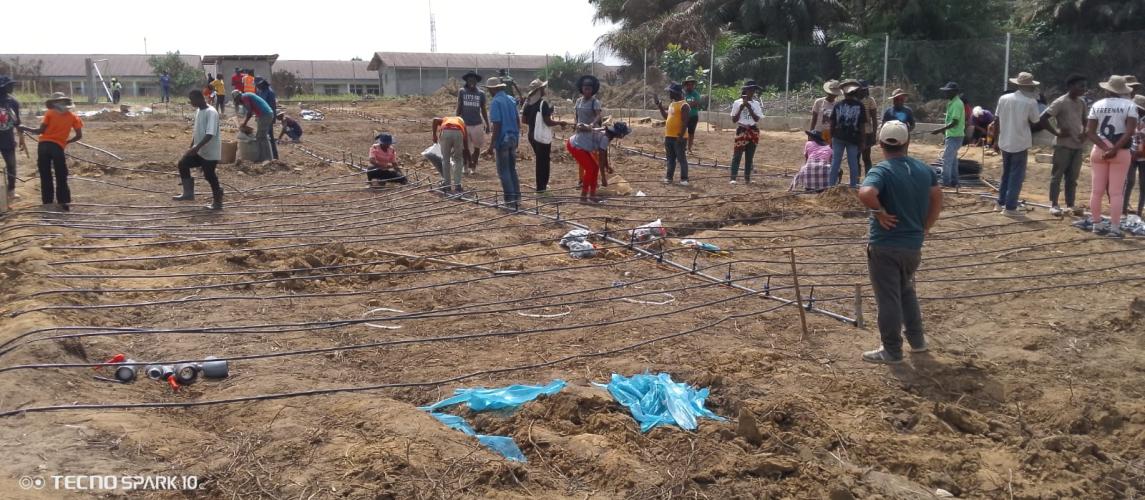
The three-day training in Buchanan, facilitated by Dr. Zied Hammami, an irrigation expert from ICBA in Dubai, focused on the design, installation, and management of drip irrigation systems. Fifty participants, including farmers, faculty members, and students, were guided through practical installation exercises.
Dr. Hamammami indicated that the head control units regulate water flow and pressure with filters, valves, and gauges, with distribution networks of mainline pipes (2–5 inches for smallholders, 6–12 inches for commercial use), sub-main and tertiary lines, emitters (drippers) with pressure-compensating designs to ensure uniform water distribution across uneven terrain. Water audits are used in assessing system functionality, distribution uniformity, and emitter performance.
He added that the field demonstrations include a fertilizer split-plot (17m × 57m) in which participants practiced pipe layout, emitter installation, and pressure testing.
Dr. Dolo highlighted several key outcomes of the training, farmers and students gained hands-on skills in modern irrigation practices, ICBA’s global expertise in salinity management was localized for Liberian conditions, farmer cooperatives and seed production units in Grand Bassa were strengthened, university students now have a living laboratory for applied agricultural research, and demonstrations at the hub provide evidence for scaling climate-smart irrigation models into national strategies.
The successful installation and operation of drip irrigation systems at the Best Practice Hub reinforces its role as a center of excellence for climate-smart agriculture in Liberia. By combining technical expertise, farmer participation, and academic engagement, the initiative is not only improving productivity and livelihoods but also building resilience against salinity and climate change.