CARI–SADFONS Project Produces 100MT of Seed, Reaching Halfway to 250MT Target; AfDB Donates Package of Farm Machinery to Boost Productivity
SUAKOKO, Bong County – The Smallholder Agriculture Development for Food and Nutrition Security (SADFONS) Project, launched in June 2021 as Liberia’s flagship agricultural initiative, continues to make significant strides in strengthening food security, reducing rural poverty, and building institutional capacity.
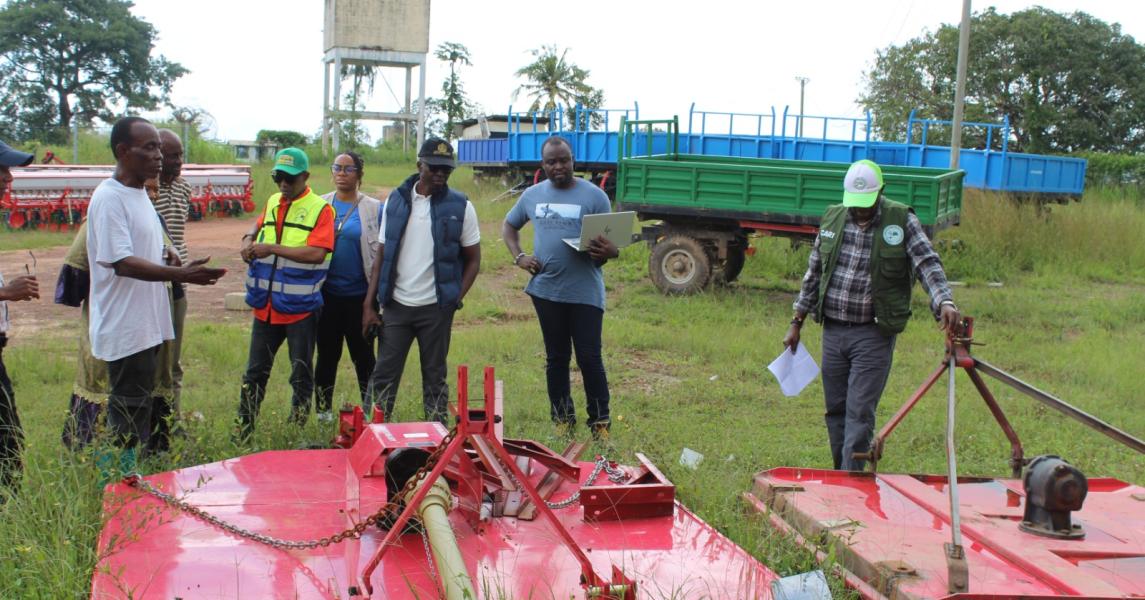
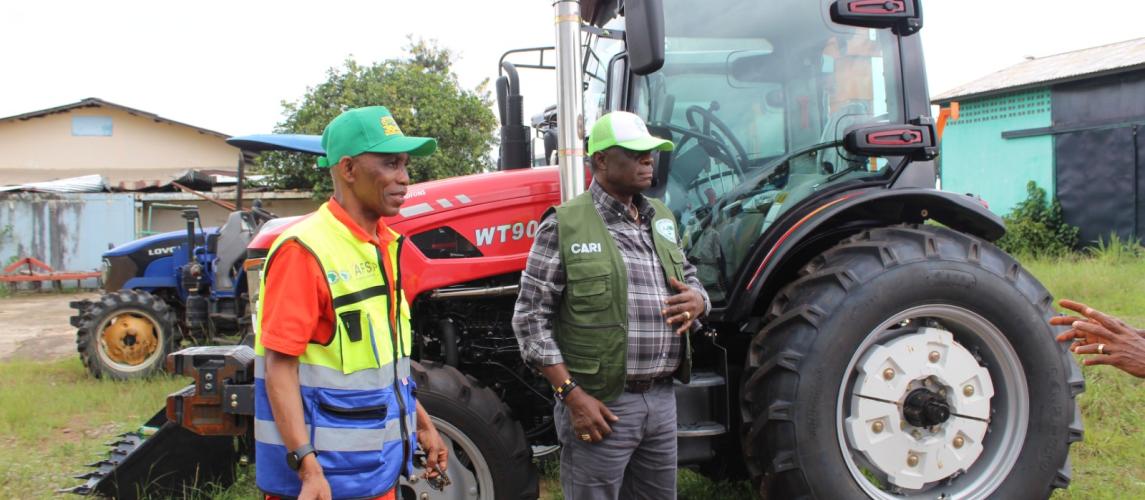
In a major boost to mechanization, the African Development Bank (AfDB) donated a 90‑horsepower tractor along with a package of farm machinery and implements to the Central Agricultural Research Institute (CARI).
During the handover, Daniel Wiagbe, National Coordination Officer (NCO), explained that the request for field equipment was anticipated, as mechanization is essential to reducing drudgery and empowering community‑based organizations. He noted that CARI and the Ministry of Agriculture have signed a Memorandum of Understanding to guarantee farmers’ access to quality seed production. The donation package includes a tractor, heavy‑duty thresher, disc plough, seed planter, power tillers, grass eater, motorized sprayers, sewing machines, GPS systems, and drone technology for monitoring production fields.
Wiagbe assured stakeholders that the NCO office in Monrovia will monitor equipment use to prevent misuse or underutilization.
Running through 2027, CARI is implementing the seed component of SADFONS across 11 counties: Grand Gedeh, Grand Kru, River Gee, Maryland, Bomi, Bong, Montserrado, Sinoe, Grand Bassa, River Cess, and Grand Cape Mount.
From its inception, the project set out to boost productivity in rice, cassava, and vegetables, while also improving value chains, market access, farmer organizations, and climate resilience. These priorities are yielding results, with the project recently announcing the production of over 100 metric tons of seed rice, marking the halfway point toward its 250mt target.
Speaking at the ceremony, Dr. Arthur Bob Karnuah, Director General of CARI, emphasized the importance of mechanization: “Without machines, we were able to produce 100 metric tons of seed rice. With this equipment, we will surely increase production. Spare parts are important to mechanization.” He also called for investments to solarize the seed bank and gene bank to ensure sustainability in agricultural research.
Other leaders echoed the significance of the milestone. Dr. Quaqua Mulbah, Deputy Director General for Research, described the donation as a turning point: “This is a new day, and I am very grateful for the donation which is intended to reduce drudgery and increase crop production in the fields.”
William F. Kortee, Jr., Director for Finance and Administration, added that the donation represents “another stepping stone for the work we do here.”
Reflecting on the broader impact, Jobson A. Momo, Director General of the Seed Development Certification Agency (SDCA), expressed appreciation to AfDB, the Ministry of Agriculture, and partners for their support in advancing Liberia’s seed systems. He noted that “for the first time, Liberia is positioned to produce certified seeds, empowering farmers to treat agriculture as a business.”
Momo recalled the establishment of Liberia’s first seed garden at CARI under the AfDB SADFONS and World Bank RETRAP projects, which became a reference point for recovering lost genetic materials such as Nerica L19 and Suakoko 8. He described this as a generational breakthrough, noting that Liberia’s seed systems had struggled since the civil war. The achievement earned Liberia recognition at the Africa India Summit, where the country was showcased as a case study in “The Harmonization of Seed Systems.”
The SDCA Director General emphasized the challenges of seed production, observing that while it is easy to turn grains into seeds, it is far more difficult to turn seeds into grains. He commended the SADFONS team, the Government of Liberia, and CARI leadership for their commitment to building a resilient seed sector that can serve local farmers and export seeds to other African and Asian countries.
With over 100mt of seed rice already produced, the CARI–SADFONS Project is confident that mechanization will accelerate progress toward its 250mt target, strengthen Liberia’s seed systems, and advance national food security.