CARI-RESADE Project Farmers’ Community Seed Bank Revives Crop Production Amid Severe Climate Losses in Buchanan
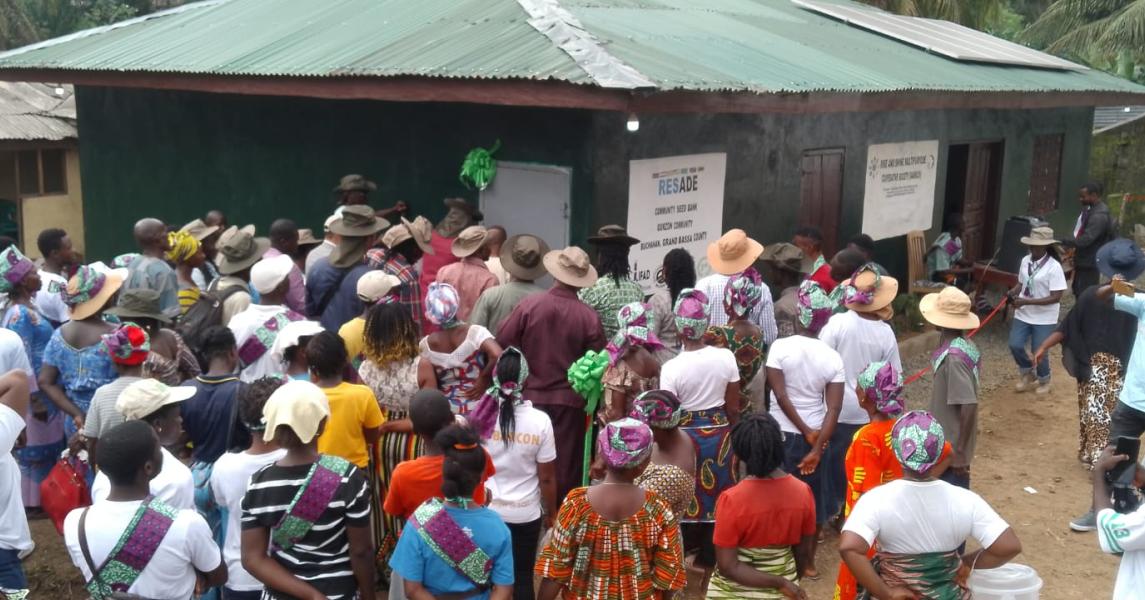
BUCHANAN, Liberia – Farmers in Grand Bassa are turning to seeds preserved in the Community Seed Bank (CSB), managed under the CARI-RESADE Project, to restore crop production at the Best Practice Hub. This intervention comes at a critical time, as climate change continues to erode yields and threaten food security, positioning seed banks as a cornerstone of resilience and sustainable recovery.
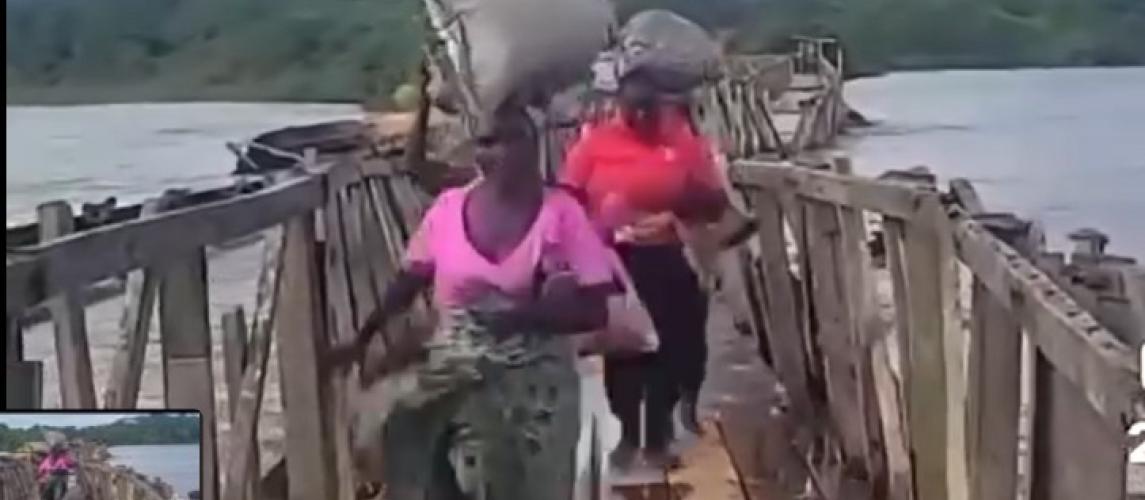
In June 2026, weeks of torrential rains washed away the only footpath bridge linking Buchanan to the Grand Bassa University campus, where the Best Practice Hub is located. The 100-square-meter plot was abandoned after harsh weather destroyed the sole access route. Crops nearing harvest were consumed by birds, wiping out the season’s yield and disrupting vital data collection. This climate-induced devastation underscored the urgent need for adaptive solutions.
In response, the Project commissioned the construction of a landmark Best Practice Hub (BPH) in July 2025. Designed as a center for innovation, training, and empowerment, the hub provides farmers and students with hands-on exposure to modern agricultural technologies and sustainable practices. It represents a bridge between research and practical application, ensuring that knowledge translates into tangible benefits for communities.
The initiative is part of the “Improving Agricultural Resilience to Salinity through Development and Promotion of Pro-poor Technologies” (RESADE) program, funded by the International Fund for Agricultural Development (IFAD) and the ICBA. The Central Agricultural Research Institute (CARI), in partnership with RESADE, is spearheading efforts to institutionalize research outputs while strengthening farmer capacity.
At the heart of this recovery is the BUCHANAN, Liberia – Farmers in Grand Bassa are turning to seeds preserved in the Community Seed Bank (CSB), managed under the CARI-RESADE Project, to restore crop production at the Best Practice Hub. This intervention comes at a critical time, as climate change continues to erode yields and threaten food security, positioning seed banks as a cornerstone of resilience and sustainable recovery.
In June 2026, weeks of torrential rains washed away the only footpath bridge linking Buchanan to the Grand Bassa University campus, where the Best Practice Hub is located. The 100-square-meter plot was abandoned after harsh weather destroyed the sole access route. Crops nearing harvest were consumed by birds, wiping out the season’s yield and disrupting vital data collection. This climate-induced devastation underscored the urgent need for adaptive solutions.
In response, the Project commissioned the construction of a landmark Best Practice Hub (BPH) in July 2025. Designed as a center for innovation, training, and empowerment, the hub provides farmers and students with hands-on exposure to modern agricultural technologies and sustainable practices. It represents a bridge between research and practical application, ensuring that knowledge translates into tangible benefits for communities.
The initiative is part of the “Improving Agricultural Resilience to Salinity through Development and Promotion of Pro-poor Technologies” (RESADE) program, funded by the International Fund for Agricultural Development (IFAD) and the ICBA. The Central Agricultural Research Institute (CARI), in partnership with RESADE, is spearheading efforts to institutionalize research outputs while strengthening farmer capacity.
At the heart of this recovery is the Community Seed Bank in Buchanan, managed collectively by five cooperatives: Rise and Shine, Love and Unity, Garmamu Multipurpose Agricultural Cooperative Society, Deloyejay, and United Women. The seed bank provides access to diverse, locally adapted seed varieties, enabling farmers to store, exchange, and plant quality seeds. This collaborative approach strengthens local seed systems, promotes crop diversity, and supports more resilient agricultural production.
The Benson River in Buchanan flows directly into the Atlantic Ocean and is heavily influenced by tidal movements. During torrential rains, the river experiences high tides that often flood areas near the Grand Bassa University campus, intensifying climate-related challenges for local communities.
Catherine Kugbeh, chairperson of BUCHANAN, Liberia – Farmers in Grand Bassa are turning to seeds preserved in the Community Seed Bank (CSB), managed under the CARI-RESADE Project, to restore crop production at the Best Practice Hub. This intervention comes at a critical time, as climate change continues to erode yields and threaten food security, positioning seed banks as a cornerstone of resilience and sustainable recovery.
In June 2026, weeks of torrential rains washed away the only footpath bridge linking Buchanan to the Grand Bassa University campus, where the Best Practice Hub is located. The 100-square-meter plot was abandoned after harsh weather destroyed the sole access route. Crops nearing harvest were consumed by birds, wiping out the season’s yield and disrupting vital data collection. This climate-induced devastation underscored the urgent need for adaptive solutions.
In response, the Project commissioned the construction of a landmark Best Practice Hub (BPH) in July 2025. Designed as a center for innovation, training, and empowerment, the hub provides farmers and students with hands-on exposure to modern agricultural technologies and sustainable practices. It represents a bridge between research and practical application, ensuring that knowledge translates into tangible benefits for communities.
The initiative is part of the “Improving Agricultural Resilience to Salinity through Development and Promotion of Pro-poor Technologies” (RESADE) program, funded by the International Fund for Agricultural Development (IFAD) and the ICBA. The Central Agricultural Research Institute (CARI), in partnership with RESADE, is spearheading efforts to institutionalize research outputs while strengthening farmer capacity.
At the heart of this recovery is the Community Seed Bank in Buchanan, managed collectively by five cooperatives: Rise and Shine, Love and Unity, Garmamu Multipurpose Agricultural Cooperative Society, Deloyejay, and United Women. The seed bank provides access to diverse, locally adapted seed varieties, enabling farmers to store, exchange, and plant quality seeds. This collaborative approach strengthens local seed systems, promotes crop diversity, and supports more resilient agricultural production.
The Benson River in Buchanan flows directly into the Atlantic Ocean and is heavily influenced by tidal movements. During torrential rains, the river experiences high tides that often flood areas near the Grand Bassa University campus, intensifying climate-related challenges for local communities.
Catherine Kugbeh, chairperson of Deloyejay Cooperative, emphasized the importance of the seed bank: “We are happy that since the bridge got damaged and our crops spoiled, we can get seeds to plant. We are not going to buy expired seeds that will carry us way back again. Now we are depending on our Community Seed Bank, where we can get good seeds to plant again.”
emphasized the importance of the seed bank: “We are happy that since the bridge got damaged and our crops spoiled, we can get seeds to plant. We are not going to buy expired seeds that will carry us way back again. Now we are depending on our Community Seed Bank where we can get good seeds to plant again.”
Plant quality seeds. This collaborative approach strengthens local seed systems, promotes crop diversity, and supports more resilient agricultural production.
The Benson River in Buchanan flows directly into the Atlantic Ocean and is heavily influenced by tidal movements. During torrential rains, the river experiences high tides that often flood areas near the Grand Bassa University campus, intensifying climate-related challenges for local communities.
Catherine Kugbeh, chairperson of Deloyejay Cooperative, emphasized the importance of the seed bank: “We are happy that since the bridge got damaged and our crops spoiled, we can get seeds to plant. We are not going to buy expired seeds that will set us way back again. Now we are depending on our Community Seed Bank, where we can get good seeds to plant again.”